
Lyophilized
Store at -20°C for long-term storage (typical laboratory practice). Short exposures to ambient temperature may occur during handling and transit. Follow institutional SOPs for storage duration and monitoring.
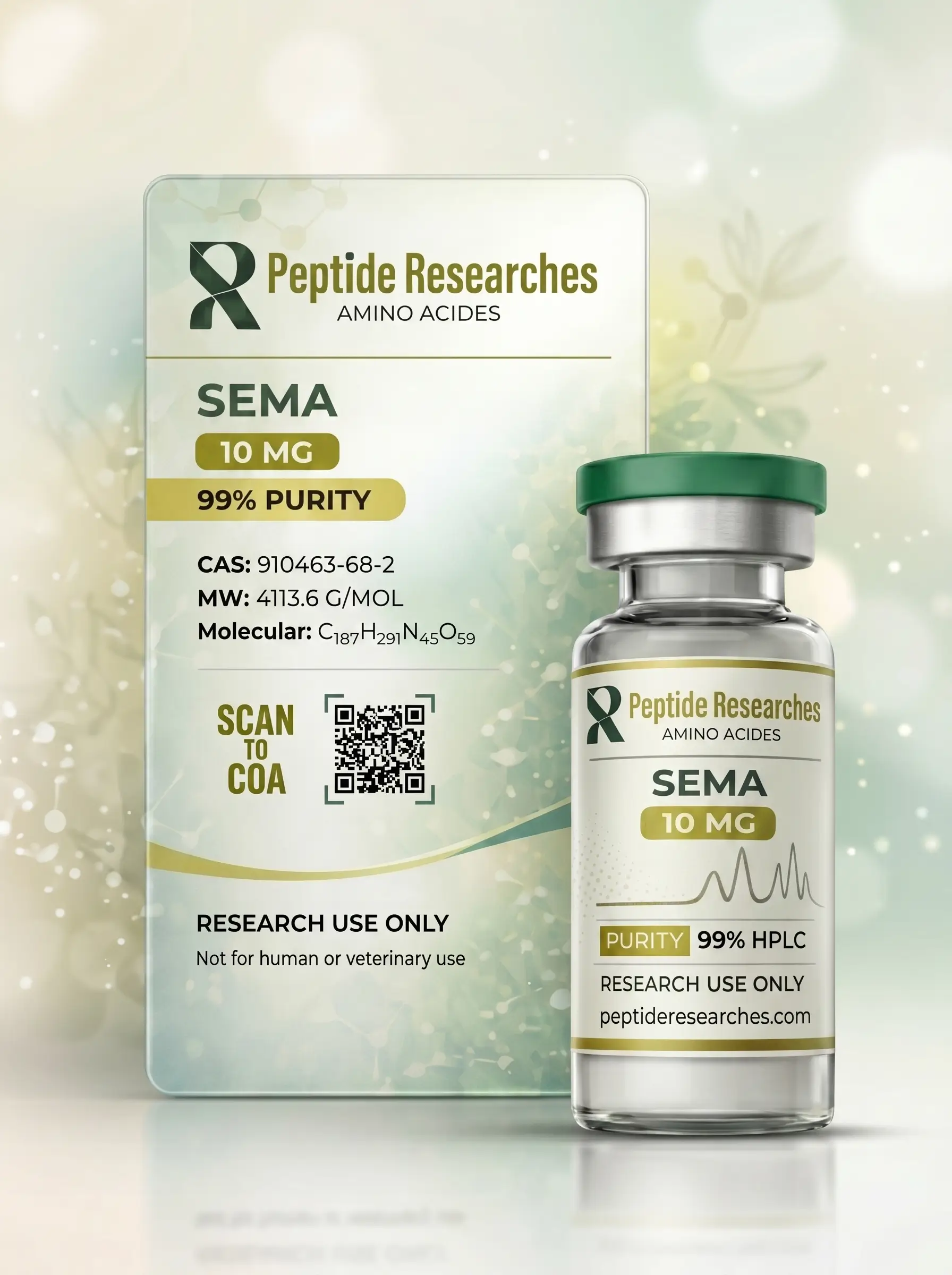
SEMA 10 MG by Peptide Researches displayed with the product box, QR code, purity information, and labeled vial.
SEMA peptide for sale is a research-grade, lyophilized peptide supplied for controlled laboratory research involving GLP-1 receptor assay systems, peptide characterization, and COA-based batch review.
For laboratory research use only. Not intended for use in humans or animals.
All Peptide Researches compounds are supplied strictly for in-vitro research use only. Each batch is tested using High-Performance Liquid Chromatography (HPLC) and Mass Spectrometry (MS), with typical purity ≥ 99% as documented in the accompanying COA.
SEMA peptide for sale is supplied as a research-grade, lyophilized peptide for controlled laboratory workflows. This catalog material is intended for peptide characterization, analytical review, GLP-1 receptor research, and validated in vitro assay systems.
SEMA is commonly reviewed in research settings where investigators examine peptide identity, purity, and lot-specific documentation. Each batch may include COA information, HPLC purity data, and MS-related confirmation details where available.
SEMA peptides may be evaluated in controlled laboratory environments using receptor-expressing platforms, assay-dependent signaling readouts, and analytical workflows designed to compare experimental conditions. Because findings depend on model design, assay setup, and research methodology, this product page focuses only on catalog-level specifications and documentation.
Lot-specific documentation is available through the COA portal to support traceability, batch review, and quality documentation within research environments. SEMA peptide is listed with 99% HPLC purity for laboratory research applications.
Store according to the product documentation and internal laboratory procedures. Keep the material protected from light, moisture, and uncontrolled environmental exposure.
For laboratory research use only. Not intended for use in humans or animals.
Purity (HPLC) | See COA for lot-specific result |
Appearance | White to off-white lyophilized powder |
Material Type | Research-grade |
Molecular Formula | C₁₈₇H₂₉₁N₄₅O₅₉ |
Molecular Weight | ~4113.6 g/mol |
CAS Number | 910463-68-2 |
Net Content | Varies by selected variant (choose mg option) |
Solubility | Method dependent; determine within your assay system using institutional SOPs |
Storage (Lyophilized) | Store protected from light and moisture; follow institutional SOPs |
Storage (Prepared for assays) | Aliquot as needed; avoid repeated freeze–thaw; follow institutional SOPs |
Intended Use | For research use only; not for human or veterinary use |
Documentation | Lot-specific COA; analytical data (HPLC/MS) when available |
SEMA peptide is a synthetic research peptide commonly discussed in GLP-1 receptor research. In laboratory settings, SEMA is studied for its defined peptide backbone, modified amino acid arrangement, and structural features that researchers examine in receptor-binding and assay-dependent signaling models.
From a chemical identity perspective, SEMA peptide is typically reviewed through its molecular structure, sequence design, molecular weight, purity profile, and lot-specific documentation. These identity markers help researchers confirm that the material matches the expected reference profile before it is used in controlled in vitro workflows.
The structure of SEMA peptide is often described in relation to GLP-1 analog research. Its peptide backbone includes sequence-level modifications that are studied for their relationship to receptor interaction, molecular stability, and assay behavior under controlled laboratory conditions.
Researchers may evaluate how structural features influence receptor-binding models, signal readouts, and comparative activity across experimental systems. However, these observations depend on the assay format, receptor platform, species model, and endpoint selected by the research team.
In GLP-1 receptor research, SEMA peptide may be used to examine how modified peptide ligands interact with receptor-expressing systems. This type of research can involve binding models, cell-based assays, and analytical workflows designed to compare receptor-related signaling patterns.
Because SEMA peptides are studied in model-specific environments, results should be interpreted within the limits of each experimental design. This section does not describe personal-use outcomes. Instead, it explains the structural research context behind SEMA peptide as a catalog-grade laboratory material.
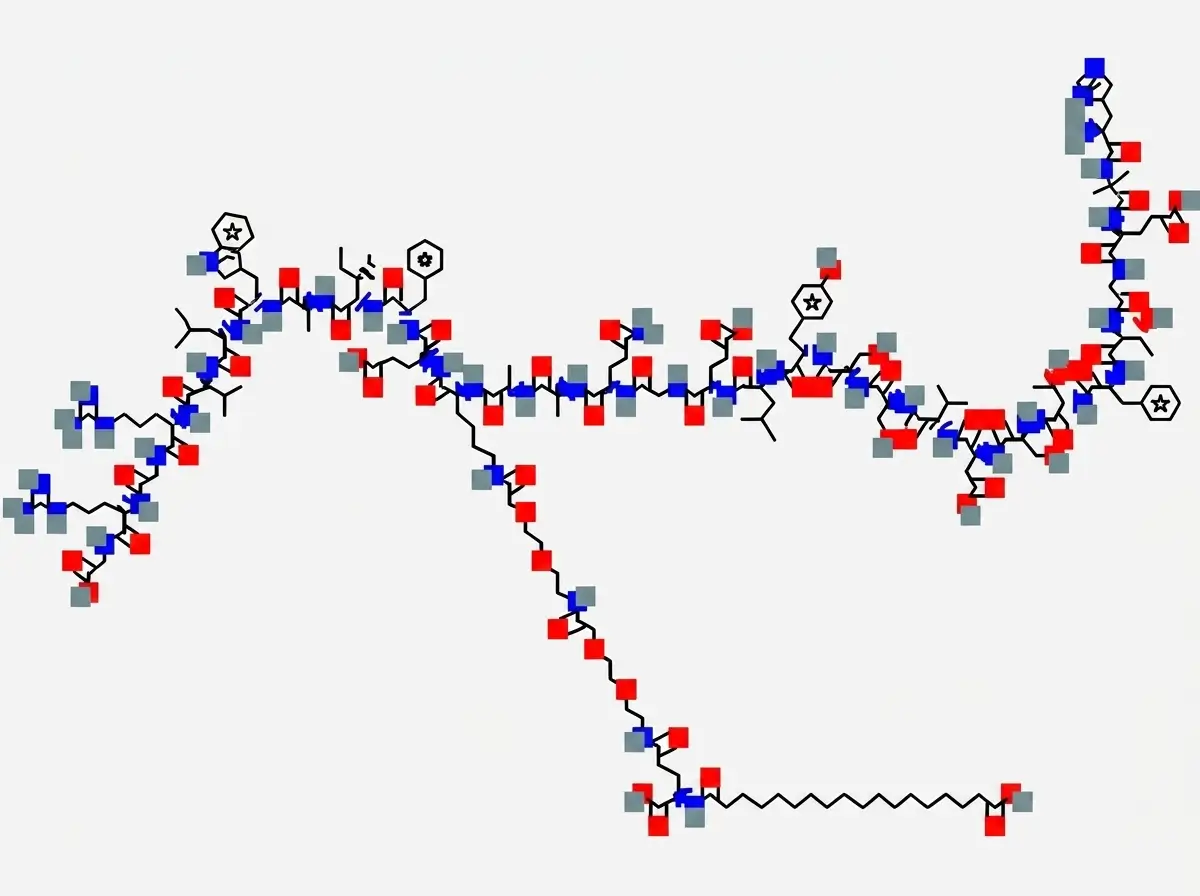
The chemical structure of SEMA peptide reflects a modified peptide sequence with features relevant to stability, receptor recognition, and laboratory assay design. In research documentation, structural review may include sequence confirmation, molecular weight comparison, HPLC purity assessment, and MS-related analytical data when available.
Together, these details support chemical identity review, batch traceability, and controlled research documentation for SEMA peptide in laboratory environments.
For laboratory research use only. Not intended for use in humans or animals.
SEMA peptide is commonly discussed in GLP-1 receptor research because its structure is studied in relation to receptor interaction, peptide signaling models, and assay-dependent laboratory readouts. On a SEMA peptide for sale product page, this context helps explain the research category while keeping the content focused on scientific catalog information.
In controlled in vitro systems, researchers may evaluate SEMA peptide through receptor-expressing platforms, binding models, and comparative assay formats. However, observed data can vary by model type, receptor platform, analytical method, and study conditions.
SEMA peptides may be reviewed in laboratory workflows that focus on identity, purity, stability, and receptor-related research data. These workflows often rely on product documentation such as HPLC purity information, MS-related confirmation when available, and lot-specific COA records.
For research teams, the most important review points are clear: product identity, batch traceability, purity profile, molecular reference data, and storage documentation. These details help position SEMA peptide as a laboratory research material rather than a consumer product.
For U.S.-based research catalog searches, terms such as SEMA, SEMA peptide, SEMA peptides, and SEMA peptide for sale are commonly used to compare product specifications and documentation. This section supports that search intent by explaining the research context behind the product without making personal-use claims.
SEMA peptide is supplied for controlled laboratory research settings where documentation, analytical review, and material traceability are important. It is listed for research use only and is not intended for use in humans or animals.
Store at -20°C for long-term storage (typical laboratory practice). Short exposures to ambient temperature may occur during handling and transit. Follow institutional SOPs for storage duration and monitoring.
Stability of prepared solutions is method- and matrix-dependent. If temporary storage is required for planned assays, laboratories commonly aliquot and store at low temperature to reduce degradation risk. Minimize repeated thermal cycling and document preparation conditions per SOP.
Shipments may use insulated packaging and cold packs when ambient conditions require it. Lyophilized material is generally suitable for standard transit durations; confirm lot handling notes on the COA where applicable.
SEMA peptide is supplied for scientific research purposes only. It is intended for controlled in vitro testing, laboratory experimentation, analytical review, and research-based investigation.
This material is not intended for use in humans or animals. It is also not intended for food, cosmetic, consumer, or personal-use applications.
SEMA peptide is commonly supplied as a lyophilized, freeze-dried powder in a sealed vial. Product labels identify the net content per vial, and selected items may be available in different size variants.
Any preparation, testing, or handling must take place only in qualified laboratory environments using appropriate equipment, validated methods, and institutional SOPs.
Product images are provided for general reference. Packaging, labels, seals, and vial presentation are reviewed for consistency, although minor visual differences may occur between product photos and delivered lots.
SEMA peptide must not be misbranded, mislabeled, redirected, or used outside its stated research purpose. Use is limited to laboratory research and scientific investigation only.
“Sema peptides” is usually a shorthand search term people use for SEMA peptide or research materials related to GLP-1 receptor studies. On your product page, define SEMA only as a research peptide for laboratory use , not as a consumer product.
Store at -20°C for up to 2 years. Stable at RT during shipping.
Use immediately or store aliquots at -80°C. Use within 30 days.
Every batch from Peptide Researches undergoes rigorous HPLC & Mass Spectrometry testing to ensure >99% purity and correct molecular structure verification.
This product is for laboratory research only. Not for human or animal consumption. Not intended to diagnose, treat, cure, or prevent any disease.
Discover · Topic hubs
Open a dedicated hub for long-form context and citations. Checkout stays on the main product page.