Laboratory preservation protocols
Lyophilized research materials stay analytically useful when storage temperature, light exposure, and reconstitution follow your lot certificate of analysis and institutional SOPs—not generic web copy.
Dual-agonist research peptide
A research-grade synthetic 39-amino acid peptide functioning as a dual agonist targeting both glucose-dependent insulinotropic polypeptide (GIP) and glucagon-like peptide-1 (GLP-1) receptors simultaneously. Used in controlled in vitro and preclinical models to study synergistic incretin signaling pathways. This page is informational (RUO); it does not describe clinical use or outcomes.
Current value
$69.00 USD
Certified purity
≥99% (per CoA methodology)
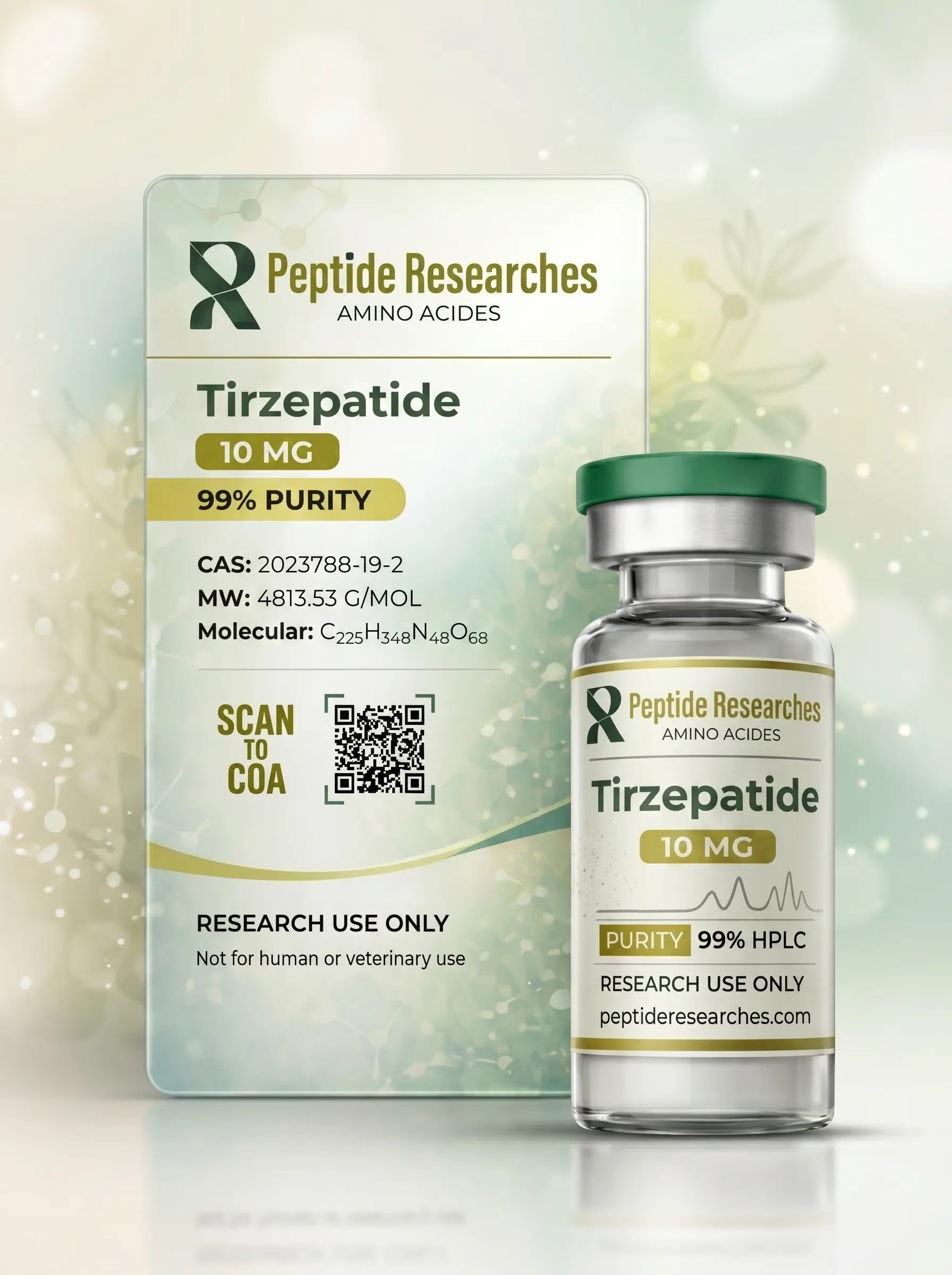
Studio product image of Peptide Researches Tirzepatide 10 MG featuring the branded box, QR code, purity details, and vial for laboratory research catalog pages.

≥99% (per CoA methodology)
Structure & identity
Key identity fields aligned with the product page; always verify against your batch CoA.
CAS number
2023788-19-2
Molecular formula
Identity per product specifications — confirm on your lot CoA.
Molecular weight
4813.5 g/mol
Sequence length
39 amino acids
Tirzepatide is engineered as a linear 39-amino acid peptide exhibiting simultaneous affinity for both GIP (glucose-dependent insulinotropic polypeptide) and GLP-1 (glucagon-like peptide-1) receptor recognition sites. This dual-receptor occupancy modulates intracellular cAMP flux, facilitating investigation of synergistic signaling pathways in isolated cell cultures.
Research applications focus on synergistic signaling mechanisms: how activating the GIP receptor alongside the GLP-1 receptor alters cellular energy homeostasis. Studies examine lipid substrate utilization in adipocyte metabolism, receptor binding kinetics without insulinogenic feedback interference, and comparative pathway analysis versus mono-target ligands.
Unlike single-pathway agonists, tirzepatide dual-receptor engagement allows researchers to investigate complementary incretin mechanisms, receptor desensitization patterns, and downstream metabolic cascade interactions in appropriate model systems. Your research program should validate receptor expression profiles, assay conditions, and pharmacological controls independently.

Analytical verification
Release testing includes reversed-phase HPLC analysis with mass spectrometry verification to confirm identity, sequence integrity, and purity (≥99% typical). Each batch includes a Certificate of Analysis (CoA) documenting chromatography data, mass spec confirmation of the intact 39-amino acid sequence, and acceptance criteria. Request the CoA for your specific lot—do not infer quality from page copy alone.
Download CoA (PDF)Lyophilized research materials stay analytically useful when storage temperature, light exposure, and reconstitution follow your lot certificate of analysis and institutional SOPs—not generic web copy.
Store lyophilized tirzepatide frozen at −20 °C in desiccated conditions for long-term stability (24 months typical). After reconstitution with sterile diluent, aliquot immediately and store at −80 °C to avoid repeated freeze–thaw cycles that degrade the peptide chain.
Batch-specific guidanceProtect from prolonged UV exposure and bright light. Peptide ligands are sensitive to thermal and photodegradation. Use amber vials or foil wrap during storage and handling in laboratory environments.
Batch-specific guidanceReconstitute gently along the vial wall with appropriate sterile solvent (bacteriostatic water or buffer solution); avoid aggressive vortexing or shaking. Calculate molarity requirements for your specific assay before adding solvent. Aliquot reconstituted solution into smaller units for single-use to maintain peptide integrity.
Batch-specific guidanceFor laboratory research use only (RUO). Not for human consumption, medical treatment, veterinary use, or diagnostic purposes. This is a chemical reference material—not a sterile pharmaceutical product or compounded medication. Handle only by qualified personnel wearing appropriate PPE (gloves, eyewear) in controlled laboratory environments. Always follow institutional protocols, local regulations, and the manufacturer CoA for your specific batch.
These authoritative sources provide context for dual-agonist research planning, incretin biology literature, and GPCR signaling methodology. Always verify material claims and analytical data against your specific batch documentation.
Primary literature index for GIP/GLP-1 dual-agonist research and incretin biology.
Regulatory context for approved incretin drugs (not applicable to research materials).
National institute resources for metabolic and diabetes-related research.
Chemical database for tirzepatide structure and property data.
Structured for FAQ rich results. Confirm all material claims against your lot CoA.
Access live pricing, quantity bundles, variant selection, and detailed fulfillment policies.
All research-grade materials ship with batch-specific CoA documentation.
Ships worldwide • Research use only • Secure checkout