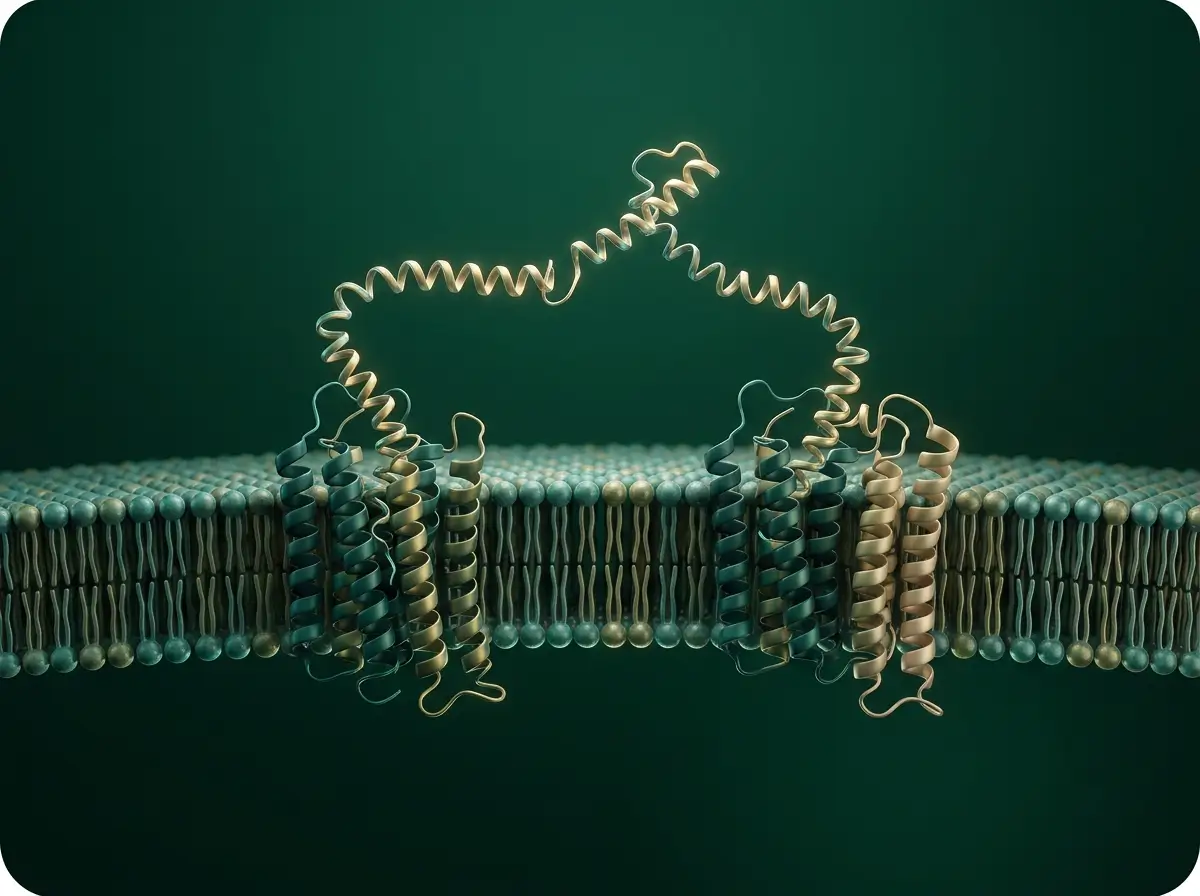
Laboratory preservation protocols
Lyophilized research materials stay analytically useful when storage temperature, light exposure, and reconstitution follow your lot certificate of analysis and institutional SOPs—not generic web copy.
Amylin research peptide
A research-grade synthetic lipidated amylin analogue designed as a dual amylin and calcitonin receptor agonist (DACRA). Used in controlled in vitro and preclinical models to study AMY1R, AMY2R, AMY3R, and CTR receptor signaling, hindbrain neuronal circuits, and metabolic pathway interactions. This page is informational (RUO); it does not describe clinical use or outcomes.
Current value
$89.00 USD
Certified purity
≥98% (per CoA methodology)
CAGRI is a research-grade, lyophilized peptide supplied for controlled laboratory studies of amylin receptor biology and peptide pharmacology. Lot-specific documentation is available via the COA portal. For research use only; not for human or veterinary use.
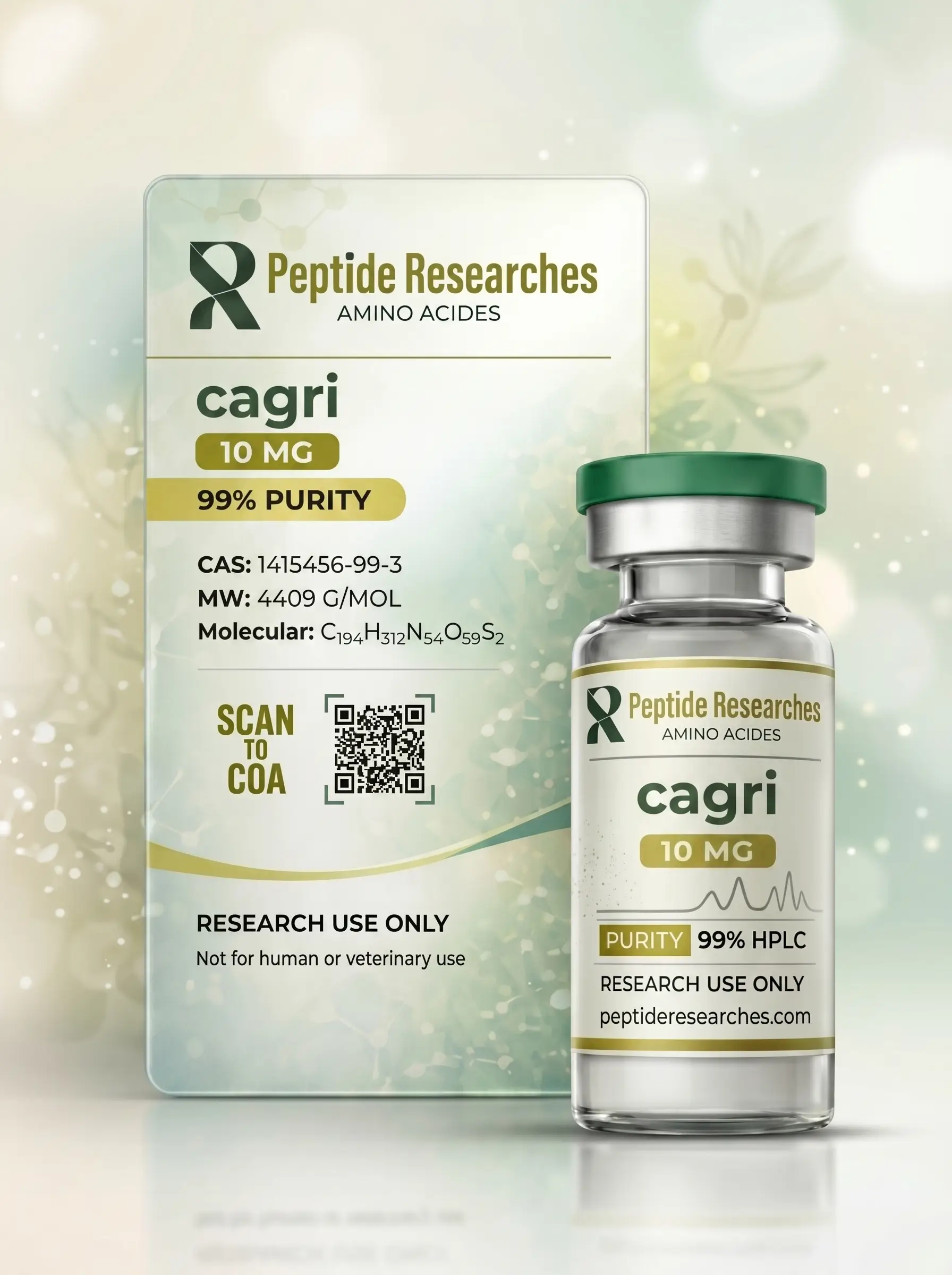
Studio product image of Peptide Researches Cagrilintide 10 MG featuring the branded box, QR code, purity details, and vial for laboratory research catalog pages.

≥98% (per CoA methodology)
Structure & identity
Key identity fields aligned with the product page; always verify against your batch CoA.
CAS number
1393461-38-5
Molecular weight
~4,409 g/mol
Development code
Identity per product specifications — confirm on your lot CoA.
Appearance
White to off-white lyophilized powder
Cagrilintide is a synthetic peptide designed to activate multiple amylin receptor subtypes (AMY1R, AMY2R, AMY3R) and the calcitonin receptor (CTR), classifying it as a dual amylin and calcitonin receptor agonist (DACRA). In research contexts, it is used to investigate amylin receptor signaling cascades, hindbrain neuronal pathway activation (area postrema and nucleus tractus solitarius), and receptor-level interactions in controlled laboratory models.
Common research applications include mechanistic signaling studies examining cAMP production, RAMP-dependent receptor assembly, and hindbrain circuit activation following DACRA engagement. Studies also explore metabolic pathway modulation, receptor subtype selectivity, and structural biology characterization using cryo-EM techniques in appropriate cell-based and tissue assays.
As a long-acting DACRA, cagrilintide serves as a tool compound for investigating amylin receptor pharmacology, lipidated peptide pharmacokinetics, and structure-activity relationships. Your research program should validate receptor expression, assay conditions, and pharmacological controls independently of vendor materials.

Analytical verification
Release testing typically includes reversed-phase HPLC analysis to confirm purity (≥98% typical) and LC-MS molecular weight confirmation (~4,409 Da) to verify lipidation integrity and sequence identity. Each batch includes a Certificate of Analysis (CoA) documenting chromatography data, mass spectrometry confirmation, and acceptance criteria. Request the CoA for your specific lot to review analytical methods and batch traceability—do not infer purity from page copy alone.
Download CoA (PDF)Lyophilized research materials stay analytically useful when storage temperature, light exposure, and reconstitution follow your lot certificate of analysis and institutional SOPs—not generic web copy.
Store lyophilized cagrilintide frozen at −20 °C or below for long-term stability. After reconstitution with appropriate sterile aqueous buffer (pH 4.5–6.0 recommended), refrigerate at 2–8 °C or freeze aliquots at −80 °C to minimize hold times and freeze-thaw stress. Follow your lot-specific CoA for batch storage recommendations.
Batch-specific guidanceProtect from prolonged UV exposure, bright light, and moisture ingress. Use amber vials or foil wrap to reduce photodegradation and hydrolysis risk during storage and handling in laboratory environments. Maintain desiccated conditions for lyophilized material.
Batch-specific guidanceReconstitute gently along the vial wall with suitable sterile aqueous buffer (avoid thiol-containing buffers like DTT); avoid aggressive vortexing or shaking. Aliquot reconstituted material immediately for single-use protocols to limit freeze–thaw cycles and maintain peptide integrity throughout your study.
Batch-specific guidanceFor laboratory research use only (RUO). Not for human consumption, medical treatment, veterinary use, or diagnostic purposes. This material is not a pharmaceutical drug or compounded medication. Handle only by qualified personnel in appropriate laboratory environments. Always follow institutional protocols, local regulations, and the manufacturer CoA for your specific batch.
These authoritative sources provide context for DACRA research planning, structural biology, regulatory guidance, and scientific literature. Always verify material claims against your specific batch documentation.
Reference page for common CAGRI metadata patterns (DACRA positioning, RUO language, storage and CoA expectations).
Chemistry metadata, molecular structure, and compound indexing context.
Cryo-EM structural data for AMY1R, AMY2R, AMY3R, and CTR engagement by cagrilintide (open access).
Primary literature lookup for DACRA mechanism, hindbrain signaling, and assay-context research.
Structured for FAQ rich results. Confirm all material claims against your lot CoA.
Access live pricing, quantity bundles, variant selection, and detailed fulfillment policies.
All research-grade materials ship with batch-specific CoA documentation.
Ships worldwide • Research use only • Secure checkout