Laboratory preservation protocols
Lyophilized research materials stay analytically useful when storage temperature, light exposure, and reconstitution follow your lot certificate of analysis and institutional SOPs—not generic web copy.
Pentadecapeptide research compound
A research-grade 15-amino-acid peptide tool compound used in controlled experimental settings to investigate tissue-repair and angiogenesis-associated signaling. This page is informational (RUO) and does not provide treatment claims, dosing, or clinical guidance.
Current value
$55.00 USD
Certified purity
>=99% HPLC (lot CoA dependent)
BPC-157 is a research-grade, lyophilized peptide supplied for controlled laboratory workflows focused on peptide characterization, analytical verification, and assay development. Lot-specific documentation is available via the COA portal. For research use only; not for human or veterinary use
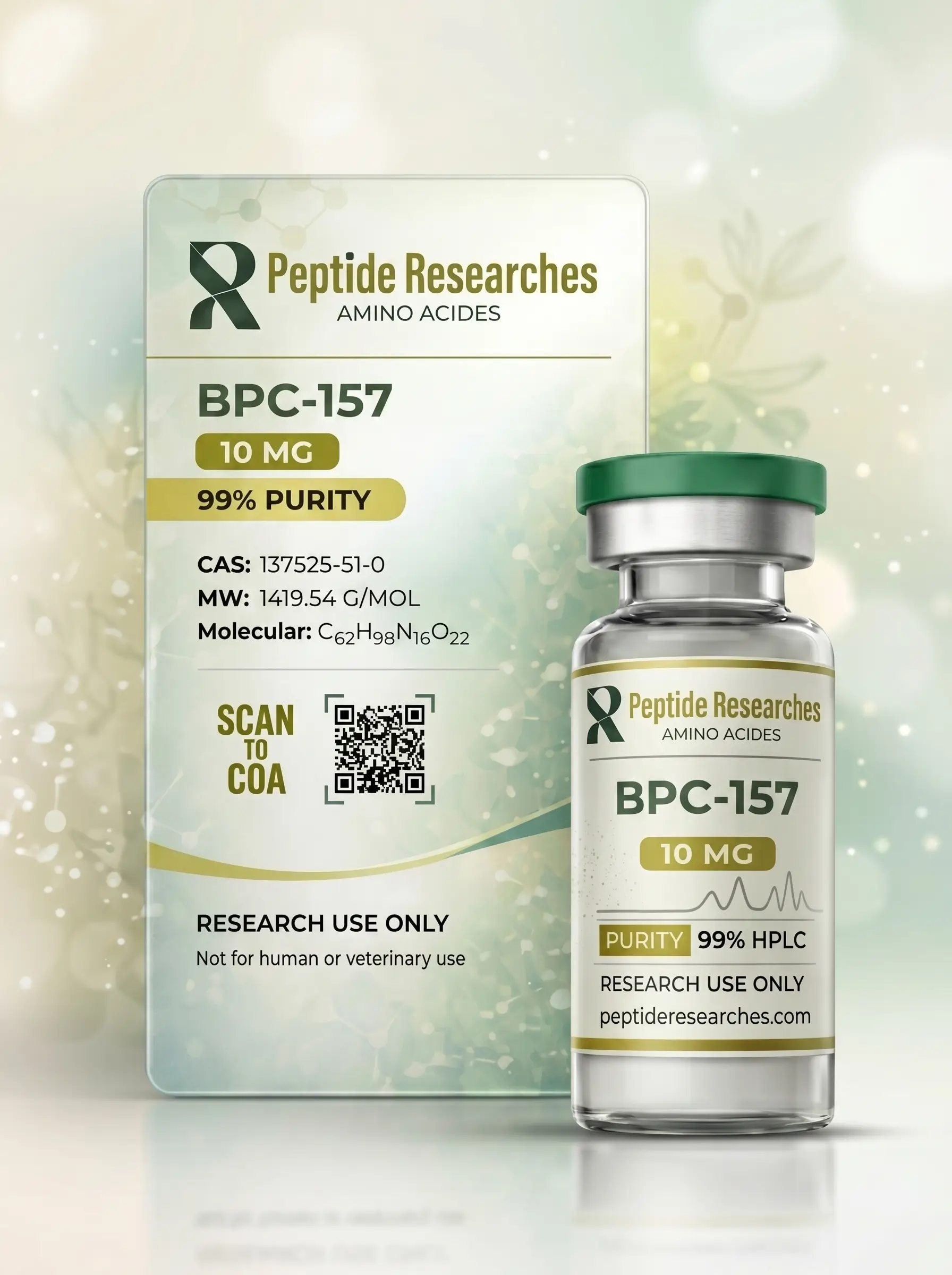
Studio product image of Peptide Researches BPC-157 10 MG featuring the branded box, QR code, purity details, and vial for laboratory research catalog pages.

>=99% HPLC (lot CoA dependent)
Structure & identity
Key identity fields aligned with the product page; always verify against your batch CoA.
Sequence length
15 amino acids (pentadecapeptide)
Molecular formula
Identity per product specifications — confirm on your lot CoA.
Molecular weight
1419.55 g/mol
Typical strengths
5mg and 10mg formats
BPC-157 is discussed in research literature as a peptide model for studying processes associated with tissue repair, angiogenesis-linked signaling, and cellular migration behavior in experimental systems.
Common investigative areas include tendon and soft-tissue models, GI-mucosal research contexts, and pathway-level marker observation under controlled in vitro or preclinical conditions.
Treat all mechanistic narratives as hypothesis-level context and validate results with your own assay design, controls, and lot-specific analytical records.

Analytical verification
Use lot-specific Certificate of Analysis documentation to verify chromatography purity context (HPLC) and identity confirmation methods where available (e.g., MS). Acceptance criteria should be aligned with your internal quality system before any protocol integration.
Download CoA (PDF)Lyophilized research materials stay analytically useful when storage temperature, light exposure, and reconstitution follow your lot certificate of analysis and institutional SOPs—not generic web copy.
Store lyophilized BPC-157 frozen in dry conditions per lot CoA guidance (commonly −20 °C or colder). After reconstitution, maintain refrigerated hold times according to lab SOP and traceability requirements.
Batch-specific guidanceProtect from bright light, humidity, and repeated temperature cycling. Keep vials sealed and minimize environmental exposure during handling to preserve peptide integrity.
Batch-specific guidanceReconstitute using appropriate sterile laboratory diluent with gentle mixing. Avoid aggressive agitation, then aliquot for single-use workflows to reduce repeated freeze-thaw degradation.
Batch-specific guidanceFor laboratory research use only (RUO). Not for human consumption, medical treatment, veterinary use, or diagnostic use. Not intended for injection, ingestion, topical application, or cosmetic use. Always follow institutional protocols, local regulations, and lot-specific CoA documentation.
These references support evidence-oriented reading on peptide research, tissue-repair pathways, and regulatory context. Validate all claims against lot-specific records and internal study controls.
Structured for FAQ rich results. Confirm all material claims against your lot CoA.
Access live pricing, quantity bundles, variant selection, and detailed fulfillment policies.
All research-grade materials ship with batch-specific CoA documentation.
Ships worldwide • Research use only • Secure checkout