Laboratory preservation protocols
Lyophilized research materials stay analytically useful when storage temperature, light exposure, and reconstitution follow your lot certificate of analysis and institutional SOPs—not generic web copy.
hGH-fragment research peptide
A research-grade peptide tool compound often discussed in non-clinical models focused on lipolysis-related signaling and tissue-biology pathways. This page is informational (RUO) and does not describe treatment, dosing, or clinical outcomes.
Current value
$65.00 USD
Certified purity
>=99% HPLC (lot CoA dependent)
AOD-9604 is a research-grade, lyophilized peptide fragment supplied for controlled laboratory workflows involving peptide characterization and mechanistic assay development. Lot-specific documentation is available via the COA portal. For research use only; not for human or veterinary use
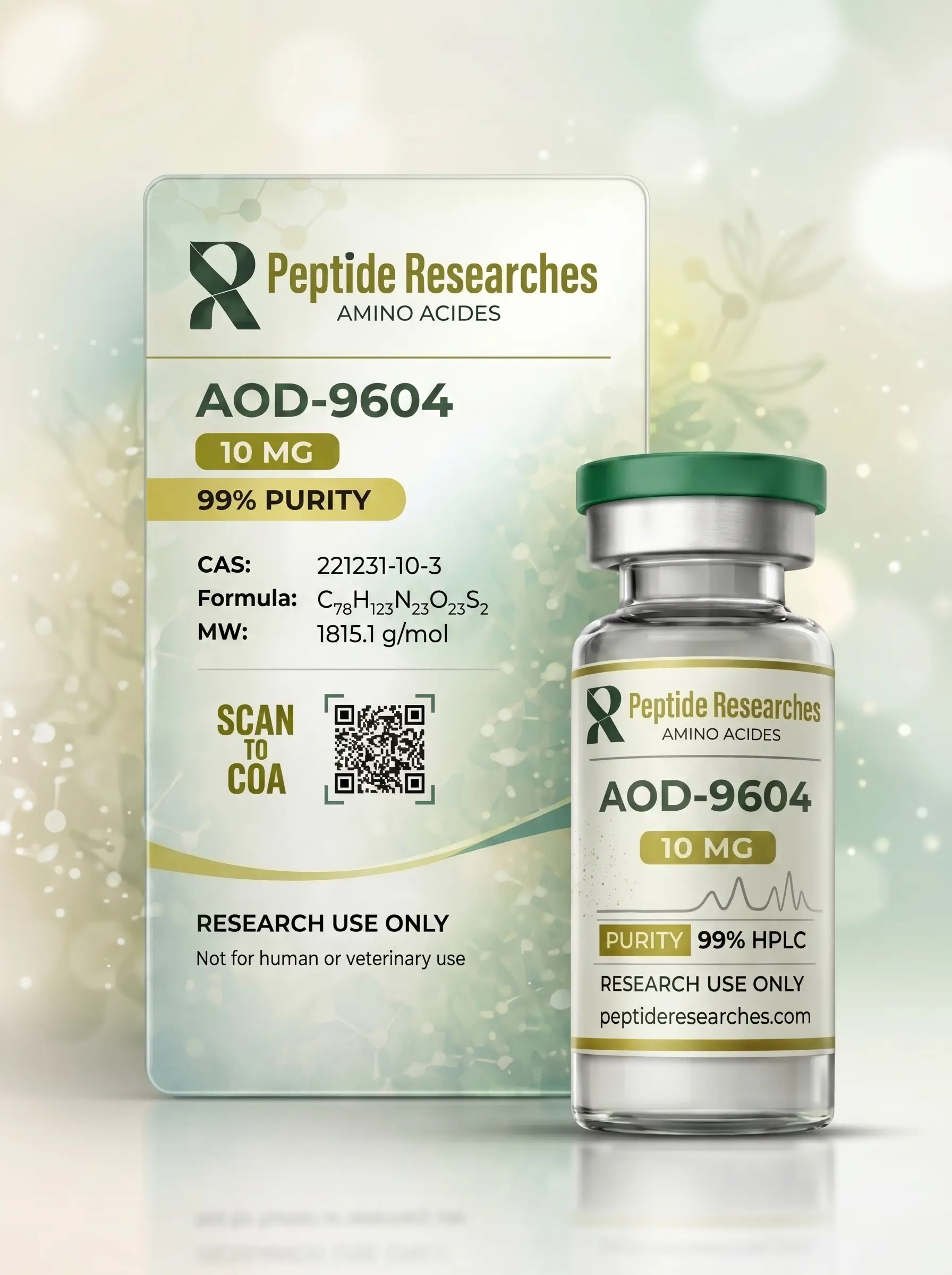
Studio product image of Peptide Researches AOD-9604 10 MG featuring the branded box, QR code, purity details, and vial for laboratory research catalog pages.

>=99% HPLC (lot CoA dependent)
Structure & identity
Key identity fields aligned with the product page; always verify against your batch CoA.
CAS number
221231-10-3
Molecular formula
Identity per product specifications — confirm on your lot CoA.
Molecular weight
1815.1 g/mol
Chemical class
Modified hGH C-terminal fragment analogue
In research literature, AOD-9604 is commonly framed as an hGH-fragment-derived analogue used to study lipid-metabolism signaling and related pathway behavior in controlled models.
Programs often evaluate assay-level endpoints such as lipolysis-associated markers, energy-substrate utilization trends, and comparative pathway responses versus other tool compounds.
Interpret all mechanism narratives as hypothesis support only and validate outcomes in your own model system with proper controls, statistical design, and lot-specific analytical documentation.

Analytical verification
A robust release review should include lot-specific chromatography data (HPLC), identity confirmation (e.g., MS), and acceptance criteria aligned to your quality system. Request the Certificate of Analysis for your exact lot and confirm method context before protocol use.
Download CoA (PDF)Lyophilized research materials stay analytically useful when storage temperature, light exposure, and reconstitution follow your lot certificate of analysis and institutional SOPs—not generic web copy.
Store lyophilized AOD-9604 frozen (commonly −20 °C or colder) in dry conditions per lot CoA. After reconstitution, refrigerate according to SOP hold-time limits and custody controls.
Batch-specific guidanceProtect from bright light, humidity ingress, and repeated temperature transitions. Use sealed containers, desiccation discipline, and light-protective handling where required.
Batch-specific guidanceUse an appropriate sterile laboratory diluent, introduce solvent gently, and avoid aggressive agitation. Aliquot prepared solution to reduce freeze-thaw exposure and preserve integrity across study runs.
Batch-specific guidanceFor laboratory research use only (RUO). Not for human consumption, medical treatment, veterinary use, diagnostic use, injection, ingestion, topical application, or cosmetic use. Always follow institutional protocols, local regulations, and lot-specific CoA documentation.
These sources support research literacy around peptide characterization, metabolism-focused model design, and regulatory context. Validate all claims against lot-specific records before use.
Structured for FAQ rich results. Confirm all material claims against your lot CoA.
Access live pricing, quantity bundles, variant selection, and detailed fulfillment policies.
All research-grade materials ship with batch-specific CoA documentation.
Ships worldwide • Research use only • Secure checkout